Salt is one of the most familiar ingredients in kitchens around the world. From seasoning everyday meals to preserving food, it has played an important role in cooking for generations. Today, shoppers can choose from several varieties, including traditional table salt, sea salt, kosher salt, and pink Himalayan salt. Among these options, Himalayan salt has attracted considerable attention because of its distinctive color, natural appearance, and mineral content.
But does its popularity mean it is a healthier choice? Is Himalayan salt better than regular salt? The answer depends on what you mean by “better.” While there are noticeable differences in processing, appearance, texture, and mineral composition, both varieties are primarily sodium chloride. Therefore, the amount consumed remains more important than simply selecting one variety over another.
What Is Himalayan Pink Salt?
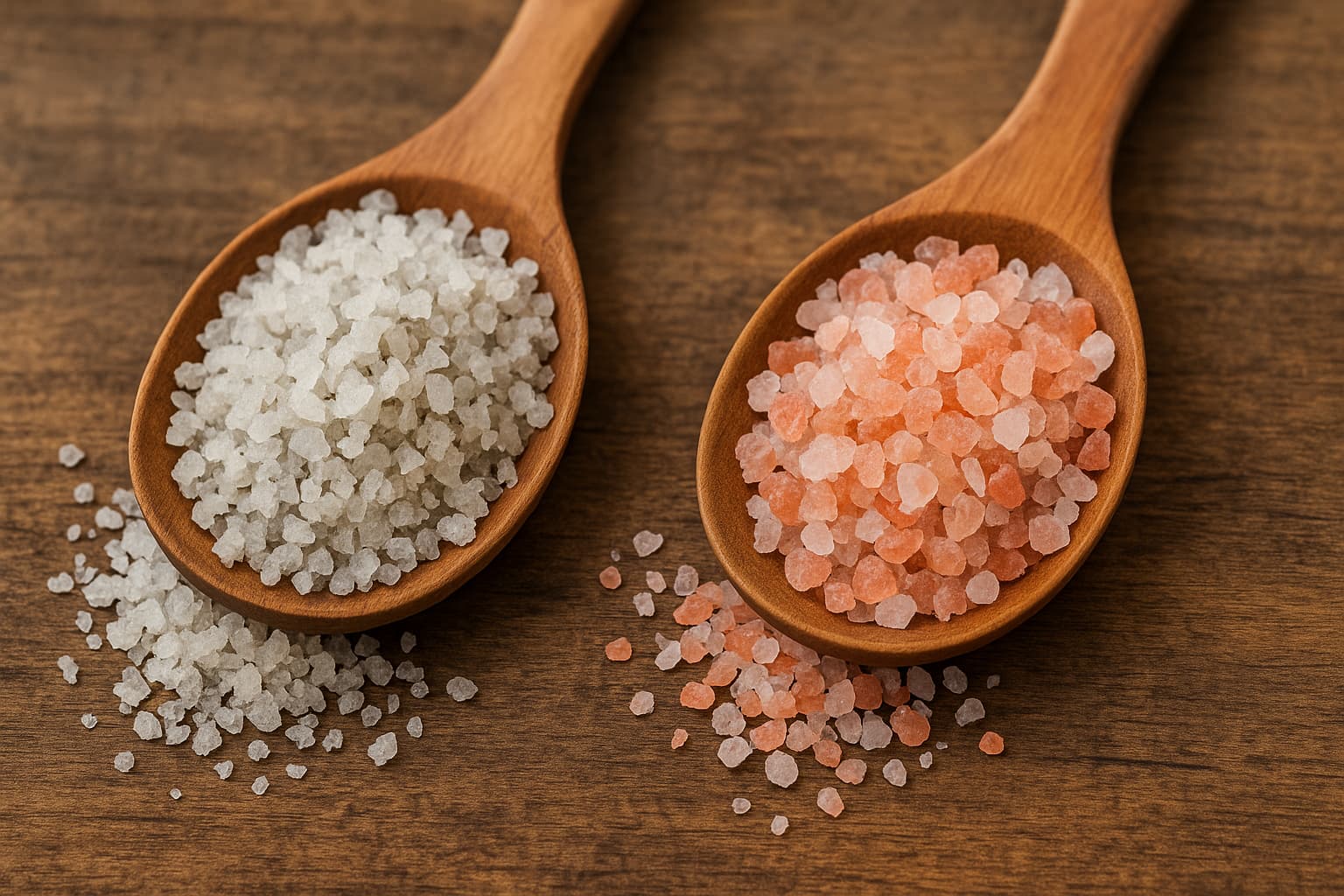
Himalayan pink salt is a rock salt mined in Pakistan. Its recognizable pink, rose, or reddish appearance comes from tiny amounts of minerals and trace elements present within the salt. It is commonly sold in coarse crystals, fine grains, blocks, and cooking products.
Unlike conventional table salt, which is generally processed into a fine texture and may contain additives that prevent clumping, Himalayan salt is typically less processed. This difference can make it appealing to consumers looking for a more natural-looking ingredient.
However, natural processing does not automatically make a food nutritionally superior. Himalayan salt remains predominantly sodium chloride, just like ordinary salt.
How Does Regular Table Salt Differ?
Regular table salt is usually refined to create uniform, fine crystals. During processing, other naturally occurring minerals are largely removed. Iodine may also be added to some table salts to help prevent iodine deficiency.
The major nutritional consideration is sodium. Table salt contains approximately 40% sodium by weight, and other commonly used salts can have broadly comparable sodium levels. Consequently, replacing regular salt with pink crystals does not automatically reduce sodium consumption.
For people monitoring their intake, checking the nutrition information and considering portion size is more useful than relying on the color or marketing of a particular variety.
Does Himalayan Salt Contain More Minerals?
One reason pink salt is often promoted as a healthier alternative is its trace mineral content. It can contain small quantities of minerals such as calcium, potassium, magnesium, and iron.
Although these substances are present, their concentrations are generally very low. They should not be viewed as a significant nutritional source of these nutrients. Cleveland Clinic notes that the minerals found in pink salt occur in such tiny quantities that consuming enough salt to obtain meaningful amounts would also result in an excessive sodium intake.
For meaningful nutrition, vegetables, fruits, legumes, nuts, seeds, whole grains, and other nutrient-rich foods are much better choices.
Which Salt Has Less Sodium?
The answer is not as straightforward as simply choosing pink over white. Both products provide sodium, and the difference can depend on crystal size, serving measurement, and the particular product.
The American Heart Association explains that different salts can vary in texture and processing, but their sodium content is generally similar. Coarser crystals may contain slightly less sodium per teaspoon because fewer crystals fit into the same spoon measurement.
This means someone hoping to lower sodium should focus on using less salt overall rather than assuming Himalayan crystals are automatically low in sodium.
Is Pink Salt More Natural?
For many buyers, the appeal of Himalayan salt comes from its appearance and minimal processing. Its unusual color can make food look attractive, while larger grains can provide a different texture when sprinkled over finished dishes.
From a culinary perspective, these qualities can certainly make it enjoyable to use. Some people also prefer its subtle flavor profile. Nevertheless, “natural” is not necessarily synonymous with “healthier.” Sodium remains the primary nutritional consideration regardless of whether the crystals are pink, white, coarse, or fine.
Why Does Sodium Matter?
Sodium is an essential mineral involved in fluid regulation, nerve function, and muscle activity. The body needs an appropriate amount, but excessive intake can contribute to elevated blood pressure.
According to the American Heart Association, most adults should consume no more than 2,300 milligrams of sodium daily, with an ideal limit of 1,500 milligrams for most adults, particularly those who have high blood pressure.
Another important point is that much dietary sodium does not necessarily come from the salt shaker. Packaged, prepared, and restaurant foods can contribute substantial amounts. Choosing fresher foods and checking nutrition labels can therefore be an effective way to manage intake.
Which One Should You Choose?
If you enjoy the appearance, texture, or flavor of Himalayan pink salt, it can be used as part of a balanced eating pattern. If you prefer ordinary table salt, there is no compelling reason to switch solely because pink salt is marketed as healthier.
For some individuals, iodized table salt can have an advantage because iodine is an essential nutrient. Himalayan salt is generally not a dependable source of iodine unless the product has specifically been fortified.
The most practical approach is to select the variety you prefer while paying attention to quantity. Flavor can also come from herbs, spices, garlic, ginger, citrus, vinegar, and other ingredients, helping you reduce dependence on added salt.
Conclusion
Is Himalayan salt better than regular salt? From a culinary standpoint, it can offer attractive color, distinctive texture, and a different presentation. Nutritionally, however, the difference is much less dramatic than many advertisements suggest. Both types primarily supply sodium chloride, and the trace minerals in Himalayan salt are present in quantities too small to provide major nutritional benefits.
Rather than focusing solely on the type of salt, consider your overall sodium intake and eating pattern. Using modest quantities, choosing minimally processed foods, reading nutrition labels, and maintaining a varied diet are more meaningful steps toward better nutrition.
For everyday cooking, Himalayan pink salt can be an appealing ingredient—but it should be viewed as an alternative form of salt, not a miracle health food.
FAQs
- Is Himalayan salt healthier than regular table salt?
Not necessarily. Both are primarily sodium chloride, and the trace minerals in Himalayan salt occur in very small quantities.
- Does Himalayan salt contain sodium?
Yes. Himalayan salt is primarily sodium chloride and therefore contributes sodium to the diet.
- Does pink salt have fewer calories?
Salt varieties contain virtually no meaningful calories. Switching from table salt to Himalayan salt does not provide a weight-loss advantage.
- Is Himalayan salt naturally iodized?
Generally, no. Unless iodine has been added to a particular product, Himalayan salt should not be relied upon as a source of dietary iodine.
- Can Himalayan salt raise blood pressure?
Yes. Like other sodium-containing salts, excessive consumption can contribute to increased blood pressure.
- Why is Himalayan salt pink?
Its pink coloration comes from small amounts of naturally occurring minerals and trace elements within the salt.
- Which salt is best for daily use?
There is no universally superior choice. The more important consideration is limiting total sodium while maintaining a balanced diet. People who need iodine may benefit from an iodized salt option, depending on their dietary needs.
- Should I stop using regular salt and switch to Himalayan salt?
There is no general medical requirement to make that switch. If you enjoy Himalayan salt, you can use it in moderation, but changing salt varieties alone does not make an otherwise high-sodium diet healthier.